
Extended Reality 101
Author
Elisha Roodt
Date Published
A Glimpse into Revolutionary Immersive Storytelling
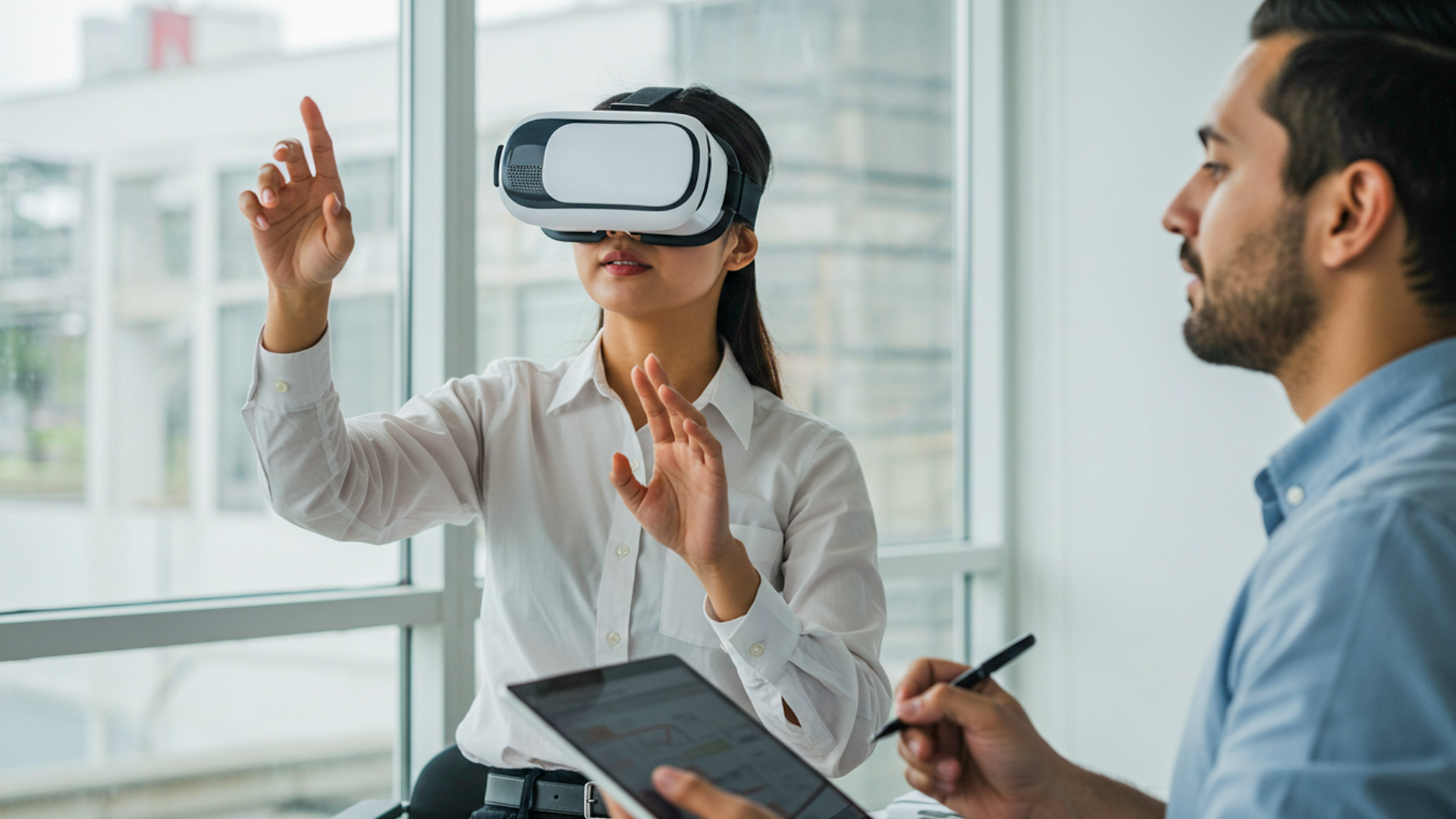
Imagine standing at the intersection of reality and imagination, where the lines blur and the ordinary transforms into the extraordinary. This is the promise of Extended Reality (XR)—a spectrum of technologies spanning Virtual Reality (VR), Augmented Reality (AR), and Mixed Reality (MR). Together, they offer a powerful toolkit that reshapes how humans perceive, learn, and interact. By weaving digital fabrics into the tapestry of real-world experiences, XR isn’t just another technological fad; it is a paradigm shift that redefines communication, industry, and creativity. What follows is a journey through XR’s landscape, illuminated with stories, analogies, and technical insights designed to turn complexity into clarity.
Understanding the XR Spectrum
Virtual Reality: Stepping into Synthetic Worlds
Virtual Reality (VR) is often likened to stepping through a portal into an alternate dimension. When you don a headset, the real world vanishes, replaced by meticulously rendered digital universes. These environments may replicate our physical reality, such as a bustling city street, or present entirely imagined realms, like alien landscapes dripping with surreal colors. A VR system achieves immersion through visual occlusion, spatial audio, and motion tracking, tricking the senses into believing the fabricated world is authentic. The core strength of VR lies in its ability to fully replace reality, enabling safe simulations for high-risk training, narrative-driven experiences, and escapism at its purest.
Picture a medical trainee practicing a complex surgery without the stakes of human life or a historian walking through a photorealistic reconstruction of ancient Alexandria. These scenarios showcase VR’s pragmatic and imaginative range. The sensation of “presence”—the conviction of truly being in another place—arises from careful calibration of hardware and software, from refresh rates that prevent motion sickness to haptic feedback that simulates touch. VR thus becomes more than entertainment; it evolves into a medium of empathy, allowing users to embody perspectives and situations they would never otherwise encounter.
Augmented Reality: Layering Digital Over the Physical
Augmented Reality (AR) overlays digital information onto the tangible world, blending virtual and physical without erasing either. Imagine pointing your smartphone at a medieval ruin and instantly seeing its original architectural splendor reconstructed before your eyes. Unlike VR, which isolates you, AR enhances awareness by enriching the visible environment with contextual data, interactive graphics, and 3D models. This tether to the physical makes AR especially suited for on-the-go applications, where information must be seamlessly accessible without disrupting real-world tasks.
The success of AR hinges on precision alignment of virtual content with physical anchors, a challenge addressed through computer vision, simultaneous localization and mapping (SLAM), and sensor fusion. Consider an aircraft engineer using AR glasses to visualize repair instructions directly over a faulty component, or a student exploring anatomy through an interactive holographic overlay on a classroom skeleton. In both cases, AR’s genius lies in contextual augmentation—it turns environments into interactive canvases where knowledge, commerce, and creativity intersect.
Mixed Reality: The Interactive Fusion
Mixed Reality (MR) sits at the frontier, merging VR’s immersion with AR’s contextual tether. It allows digital objects not just to appear within the physical world but to interact with it as though they belonged there. A holographic piano placed in your living room could respond to your hand movements, keys glowing as you press them. Unlike simple AR overlays, MR systems use advanced spatial mapping to understand surfaces, lighting, and occlusion, enabling digital entities to behave with realistic physicality.
This two-way interaction between virtual and real transforms how we engage with technology. Architects can conjure entire scale models into conference rooms, manipulating them with hand gestures, while defense trainers can integrate holographic simulations into real-world tactical drills. MR’s ambition is not simply to add digital frosting to the physical cake but to create a seamless fusion where both layers coexist and influence each other dynamically. In essence, MR is the crucible where imagination and reality converse fluently.

The Hardware Ecosystem of XR
Head-Mounted Displays: Windows into Alternate Realities
At the core of XR experiences lie head-mounted displays (HMDs), the literal lenses through which we perceive digital dimensions. VR headsets like the Meta Quest or Valve Index enclose vision entirely, while AR/MR headsets like Microsoft’s HoloLens or Magic Leap project information into the user’s field of view. These devices are marvels of miniaturized engineering, housing high-resolution screens, gyroscopes, accelerometers, and increasingly, eye-tracking sensors. Together, they orchestrate a symphony of perception, ensuring the brain receives coherent sensory input that sells the illusion.
But the magic of HMDs isn’t only in optics; it’s also in ergonomics. Comfort, weight distribution, and field of view determine whether the experience is liberating or fatiguing. Consider a headset that feels like a medieval helmet—no matter how advanced its graphics, its utility crumbles if users cannot wear it for extended sessions. The most successful HMDs balance immersion with comfort, ensuring accessibility to audiences beyond early adopters and hardcore technologists. They serve as portals, but also as wearable devices that must respect the human form.
Controllers, Gloves, and Beyond
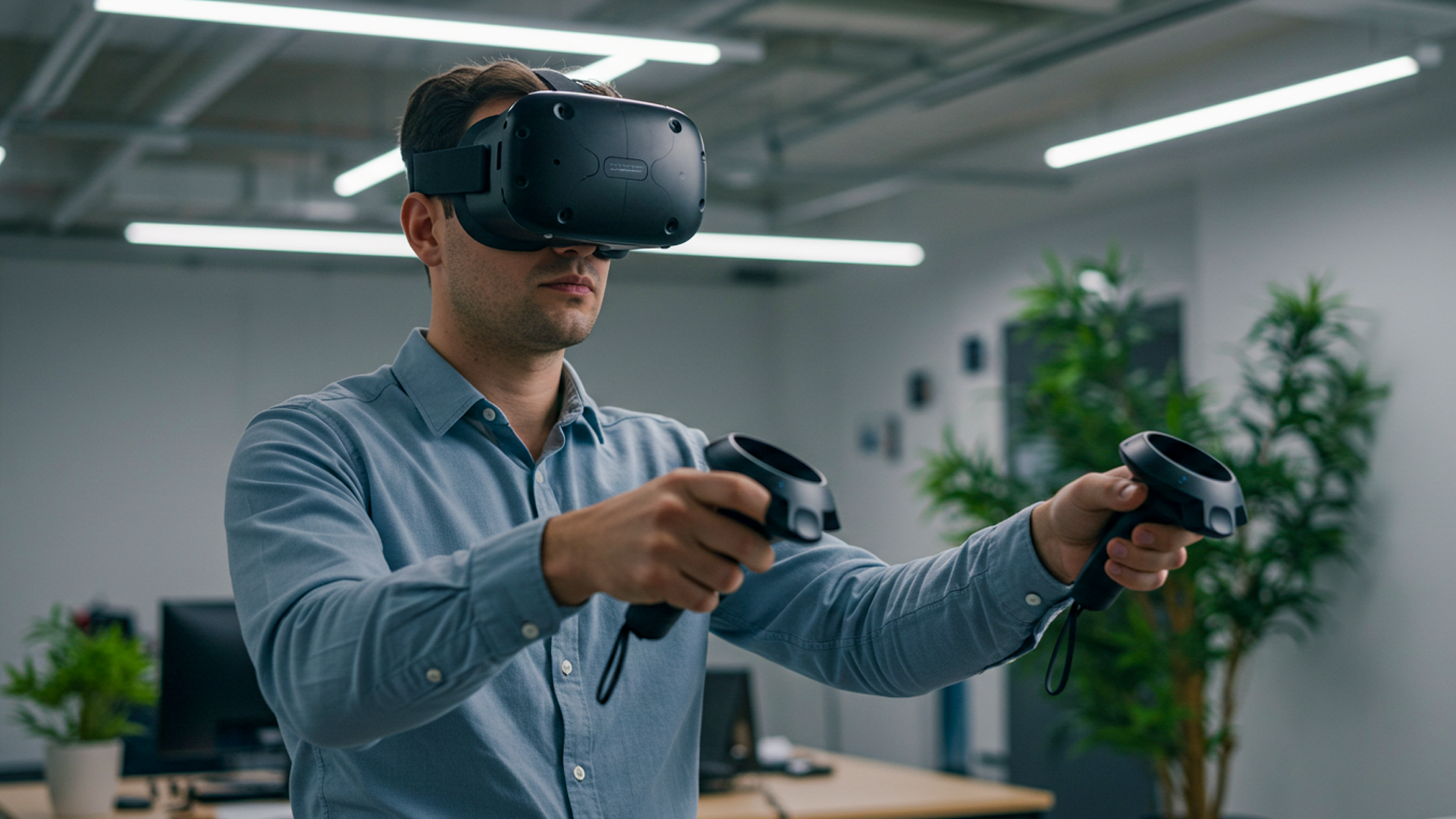
Input mechanisms dictate how humans converse with digital realms. Traditional VR controllers offer joysticks, triggers, and buttons to approximate physical actions, but more advanced systems explore gloves, haptic suits, and even neural interfaces. The ambition is to dissolve the barrier between intent and execution: when you reach to grasp a virtual mug, the feedback should mimic ceramic resistance rather than a cold joystick. This pursuit of naturalistic interaction bridges the uncanny valley between human intuition and machine mediation.
Consider haptic gloves embedded with actuators that push back against your fingers as you clutch a digital object. These devices transform touch into a language, extending beyond gaming into industrial training, therapy, and remote collaboration. The evolution of controllers reflects a larger truth about XR—it is not merely about seeing fantastical things, but also about feeling, manipulating, and co-existing with them. The more seamlessly these interfaces translate human gestures into digital commands, the closer XR comes to genuine embodiment.
Environmental Sensors and Tracking Systems
Behind the scenes of XR, an invisible orchestra of sensors and algorithms keeps the illusion intact. Inside-out tracking cameras on headsets analyze surroundings to maintain spatial stability, while external beacons or lidar systems enhance precision. Motion capture suits can translate the subtleties of human movement, from a dancer’s pirouette to a surgeon’s steady hand, into digital mirrors. These technologies ensure that virtual interactions align with physical expectations, a critical factor in preserving presence and avoiding disorientation.
Tracking systems also raise profound questions about privacy and data ownership. When an XR device continuously maps your environment and body, who controls that data? The balance between immersive functionality and ethical responsibility remains delicate. Still, without tracking fidelity, XR collapses into gimmickry. Imagine reaching for a holographic tool only for it to jitter out of alignment—the illusion shatters. Thus, environmental sensing is the scaffolding of XR, supporting the structure of believable immersion.
Applications Transforming Industries
Education and Training
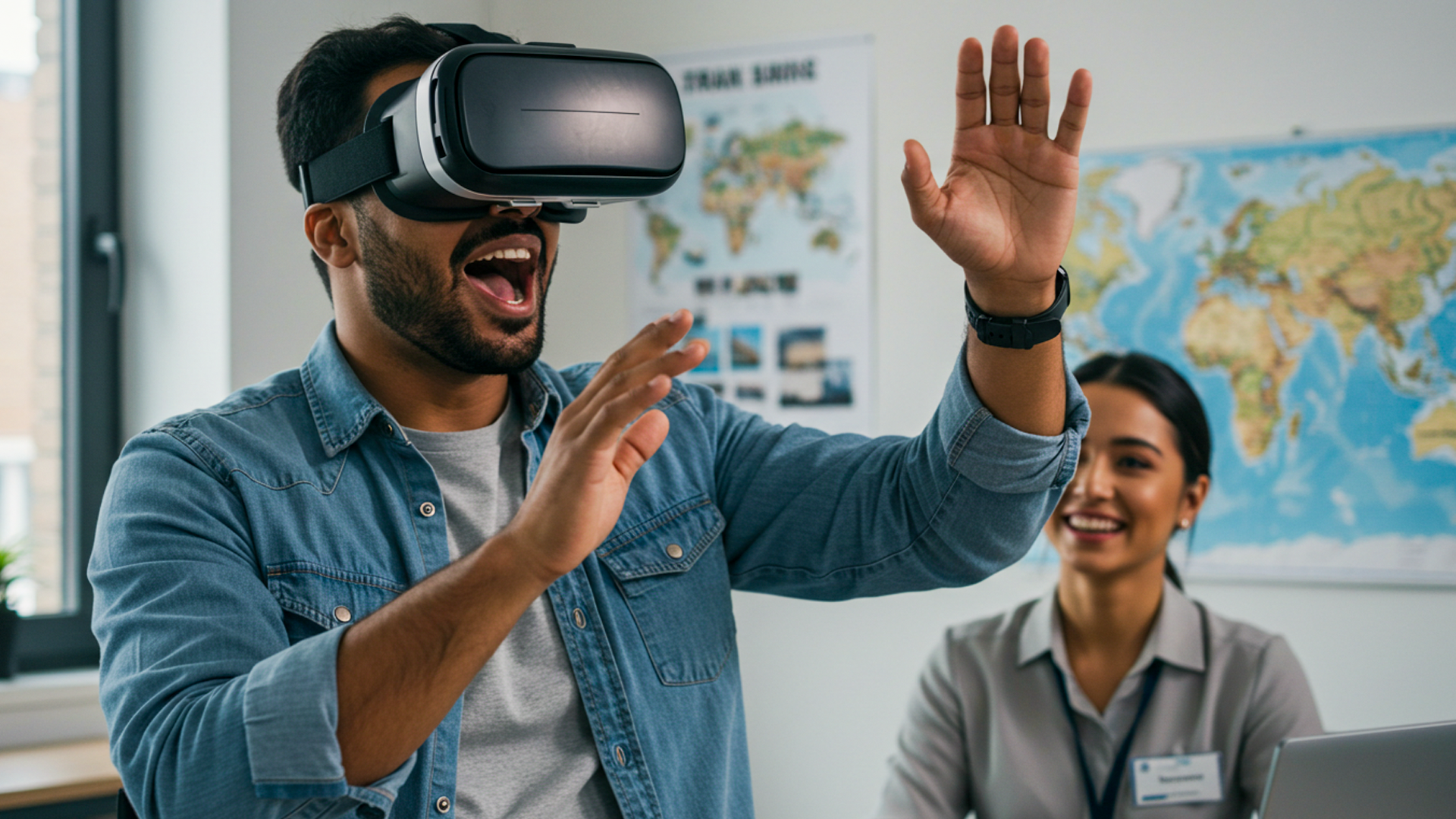
In classrooms of the near future, geography lessons may involve walking the savannas of Africa or diving into the Mariana Trench, all without leaving the school building. XR collapses distances, bringing learners face-to-face with phenomena once confined to textbooks. Beyond education, industries harness XR for training scenarios that demand realism without risk—pilots rehearse emergency landings, surgeons refine techniques, and assembly line workers practice on virtual machinery. The controlled immersion of XR allows mistakes to become teachers rather than catastrophes.
Such applications amplify engagement through multisensory involvement. A trainee does not simply read about hydraulic systems; they walk around them, disassemble them virtually, and see internal mechanisms animate in real time. This kinesthetic learning bypasses rote memorization, anchoring concepts in embodied experience. XR thus nurtures intuition, producing professionals who not only know their craft but feel it in their bones. In an era where skills evolve faster than curricula, such adaptability becomes priceless.
Healthcare and Therapy
Hospitals are not typically considered hubs of virtual exploration, yet XR is rapidly rewriting that narrative. Therapists use VR environments to treat phobias, guiding patients through controlled exposures that would be impossible or unethical in reality. Physical rehabilitation programs employ XR to gamify repetitive exercises, turning tedious motions into engaging challenges. Surgeons rely on AR overlays to visualize internal anatomy mid-procedure, reducing uncertainty and improving precision. The line between medicine and media grows porous, yielding tangible improvements in patient outcomes.
The human mind is remarkably malleable, and XR taps into its plasticity. A burn patient distracted by immersive VR reports reduced pain perception; a stroke survivor motivated by gamified therapy regains motor skills more eagerly. By combining clinical science with technological immersion, XR emerges not as a cold machine but as a compassionate assistant, augmenting the resilience of both patients and practitioners. This convergence demonstrates XR’s power to not merely entertain but to heal.
Enterprise and Industry
Enter the modern factory, where XR transforms abstract schematics into living blueprints. Workers wearing AR glasses view assembly instructions overlaid directly onto components, minimizing errors and accelerating production. In remote collaboration, teams scattered across continents convene in shared virtual spaces, manipulating holographic prototypes as though gathered in a single workshop. These scenarios highlight XR’s utility as a productivity amplifier, weaving digital threads into the fabric of enterprise operations.
The implications ripple outward: reduced costs from fewer errors, enhanced creativity through collaborative design, and increased safety via simulated training. Consider a construction crew visualizing structural plans at full scale on-site, identifying flaws before pouring concrete. In such cases, XR is less a flashy gadget than a pragmatic ally, optimizing workflows in ways spreadsheets never could. It proves that immersive media is not only about wonder but also about measurable impact.

The Road Ahead: Challenges and Opportunities
Technical Hurdles to Overcome
Despite its promise, XR faces formidable obstacles. Latency, the delay between action and display, can break immersion and cause discomfort. Rendering high-fidelity graphics in real time requires immense computational horsepower, often beyond mobile hardware. Battery life constrains portability, while bandwidth limits tether cloud-based experiences. Engineers wrestle with these bottlenecks daily, balancing innovation against the laws of physics and economics. XR’s trajectory is shaped not just by creativity, but by relentless optimization of performance pipelines.
Imagine trying to run a symphony on a pocket radio; this is akin to delivering lifelike XR on current consumer hardware. Yet incremental advances—foveated rendering, 5G connectivity, edge computing—suggest solutions are within reach. As these technologies converge, the once-daunting technical cliffs become navigable hills. The journey is slow but inevitable, driven by both market demand and the human appetite for immersion. XR’s future hinges on turning these challenges into springboards rather than stumbling blocks.
Ethics, Privacy, and Digital Boundaries
Immersion comes at a price: the harvesting of unprecedented amounts of personal data. XR devices capture not only what users see but how they move, gesture, and even emote. Such biometric insights could revolutionize personalization but also invite exploitation. Who owns the digital map of your living room, or the telemetry of your gaze? These questions are no longer theoretical—they are pressing challenges at the nexus of technology, law, and human rights. Without thoughtful regulation, XR risks becoming an Orwellian mirror as much as a liberating lens.
Analogies abound: if data is the new oil, XR collects it not from the earth but from the intimate recesses of human experience. Safeguarding this treasure trove requires transparency, encryption, and ethical design. The industry must balance the pursuit of profit with the protection of autonomy. Otherwise, the same systems that empower creativity could erode trust, transforming immersive wonderlands into surveillance labyrinths. Ethical stewardship thus becomes as critical as technical innovation in shaping XR’s destiny.
The Horizon of Possibility
Despite obstacles, the horizon of XR brims with possibility. Imagine a future where virtual offices rival physical ones, where education adapts dynamically to learners’ pace, and where shared digital layers redefine public spaces. XR may well become as ubiquitous as smartphones, embedded not as novelty but as necessity. Its potential lies in democratization—accessible devices, affordable content, and intuitive interfaces that invite participation across demographics and geographies.
At its heart, XR is not about escaping reality but expanding it. It is a lens that refracts human creativity into infinite spectra, each hue representing a new way of perceiving, learning, and connecting. As pioneers chart this evolving terrain, their success will hinge not only on technological wizardry but also on vision—seeing beyond screens and sensors to the human stories that XR can amplify. In that sense, XR is less a technology and more a canvas, awaiting the brushstrokes of imagination.