

Virtual Reality 101
Author
Elisha Roodt
Date Published
Navigating the Fundamentals of Virtual Reality
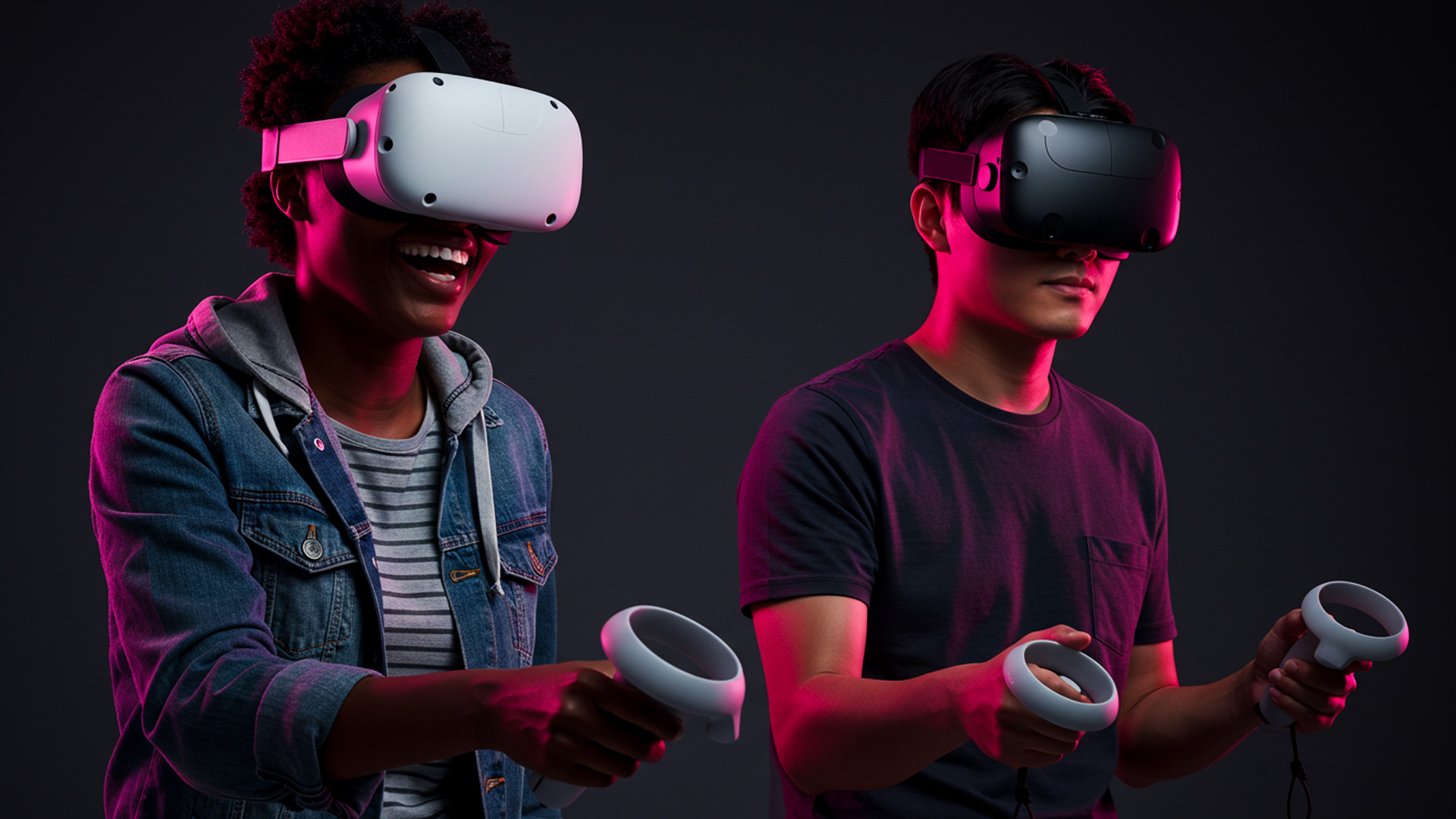
Picture Sarah, a neuroscientist, donning a sleek VR headset to explore the Martian landscape from her lab. As she reaches out to touch crimson sands, the headset’s sensors calibrate to her gestures, teleporting her across spatial dimensions in real time. This narrative anchors our exploration of Virtual Reality 101, a domain where optics, computation, and human perception converge. Whether you’re a developer optimizing a render pipeline or an enthusiast curious about haptic ecosystems, you’ll find guiding principles in the sections ahead.
The Essence of Immersion: Understanding Presence
Perceptual Fidelity
Imagine stepping into a photorealistic cathedral, where each intricate arch and mosaic tile resolves with angular resolution metrics rivaling the human fovea. Perceptual fidelity hinges on stereoscopic depth cues, field of view expansiveness, and minimal pixel persistence. Advanced headset optics leverage Fresnel lenses and aberration correction to deliver hemispherical binocular parallax that our brains interpret as tangible space. When the microdisplay’s subpixel arrangement aligns with ocular optics, aliasing dissolves, replacing jagged edges with seamless gradients. This synergistic interplay between hardware design and perceptual neuroscience transforms raw pixel data into an immersive tapestry our sensory cortex readily accepts as reality.
Calibration procedures, such as inter-pupillary distance alignment and ocular convergence tuning, ensure that each rendered frame synchronizes with our vestibular system. Refresh rates exceeding 90 hertz reduce flicker-induced discomfort, while low persistence rendering minimizes motion blur during rapid head rotations. Motion-to-photon latency, measured in milliseconds, directly influences cybersickness thresholds. By leveraging asynchronous timewarp and predictive tracking algorithms, modern headsets anticipate user movements, preemptively warping rendered scenes to maintain temporal coherence. This orchestration of hardware precision and software predictivity crafts a seamless continuum between user intent and virtual reaction, anchoring the illusion of presence in a malleable digital expanse.
Embodied Interaction
In VR, tactile authenticity is pivotal, bridging the virtual chasm through embodied interaction. Developers harness sensorimotor contingencies to synchronize physical gestures with digital responses, creating a kinesthetic feedback loop that deceives proprioceptive senses. Haptic actuators, from vibrotactile arrays to force-feedback exoskeletons, embed subtle pressure gradients and resistance profiles within the user’s limbs. When Sarah’s fingertips skim a simulated marble surface, microfluidic haptic actuators replicate the cool, smooth texture against her skin. This somatosensory convergence transforms abstract polygons into palpable geometry, enabling users to engage with virtual objects as intuitively as they would in the tangible world.
Through metaphors akin to a sculptor molding clay, VR systems adapt haptic parameters in real time, calibrating force vectors to match user expectations. Middleware frameworks translate abstract physics simulations into actuator commands, ensuring tactile consistency across diverse content. When Sarah grips a simulated metal rod, algoritmic interpolation adjusts feedback intensity to emulate weight and inertia. Simultaneously, kinesthetic illusions exploit skin stretch and thermal cues to reinforce material authenticity. This layered haptic orchestration fosters a sense of corporeal agency, enabling users to perceive virtual tools and terrains as extensions of their own bodies rather than mere graphical representations.
Environmental Realism
Environmental realism synthesizes multiple sensory modalities to trick the brain into accepting virtual realms as authentic. Spatial audio engines employ head-related transfer functions to deliver directional soundscapes that adapt dynamically as users pivot and stride. Simultaneously, procedural generation algorithms instill variability within virtual terrains, forest glades, or urban backdrops, preventing repetitive patterns that break the environment’s cohesion. Light propagation models incorporate global illumination, ambient occlusion, and volumetric scattering, painting scenes with chiaroscuro depth. These computational techniques merge to dissolve the boundary between user and simulation, enveloping participants within ecosystems that behave according to the physics governing our quotidian reality.
Ambient cues often tell stories before any text or dialogue appears. In our hypothetical Martian colony simulation, rustling dust devils and creaking habitat modules precede Sarah’s visual discoveries, priming her subconscious for geological exploration. Particle systems simulate dust motes that swirl authentically under dynamic lighting, while atmospheric algorithms replicate scattering effects to evoke alien skies. Combined with adaptive soundtrack modulation that shifts tonal qualities based on virtual proximity and action, these elements forge a narrative tapestry woven directly into the environment. Such layered storytelling ensures participants not only perceive but emotionally inhabit virtual worlds as if they were chapters in an unfolding saga.
Computational Foundations: Rendering and Performance
Rasterization Versus Ray Tracing
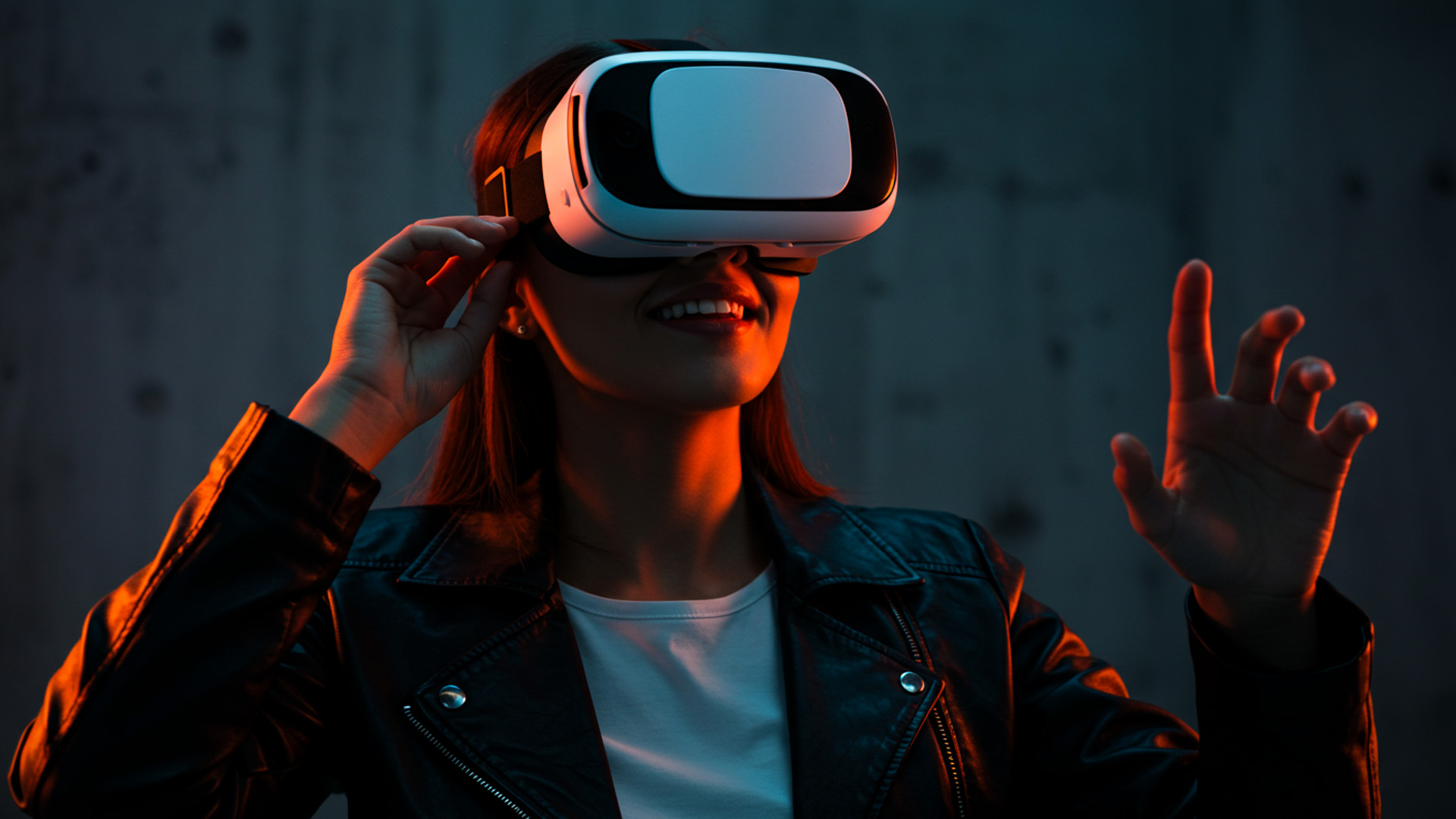
Rasterization pipelines convert three-dimensional mesh data into two-dimensional fragments using programmable vertex and pixel shaders. This scanline-based approach excels at minimizing computational overhead, allowing for sustained frame rates crucial to immersive VR. By contrast, ray tracing simulates light transport by casting rays into a scene, calculating reflections, refractions, and shadows through physical models of radiance transfer. Although traditionally more resource-intensive, modern GPUs with specialized RT cores accelerate real-time ray casting, closing the performance gap. Hybrid rendering architectures now integrate rasterization and ray tracing, delivering photorealistic visuals without compromising the latency budgets essential to user comfort.
For VR, optimization extends beyond raw shader performance to include level-of-detail (LOD) systems, occlusion culling, and temporal anti-aliasing. Foveated rendering further economizes GPU workload by reducing pixel density in peripheral vision while maintaining crystalline detail at the gaze’s focal point. This technique leverages eye-tracking sensors to allocate rendering resources adaptively, mirroring human visual acuity. Developers also employ asynchronous reprojection and multi-resolution shading to reconcile computational demands with the strict frame interval requirements of immersive headsets. Together, these optimization strategies preserve fluidity, ensuring that even graphically complex scenes retain the sub-20 millisecond frame times demanded by modern VR platforms.
Frame Timing and Latency
Stable frame pacing in VR is analogous to a metronome guiding orchestral performance, where any deviation can disrupt the user’s equilibrium. Microstutters and jitter translate into perceivable hiccups that shatter immersion and may induce motion sickness. By employing high-precision timers and prioritizing GPU workloads, SDKs maintain uniform frame intervals that harmonize with human vestibular expectations. Vertical synchronization (V-Sync) and low-latency modes mitigate screen tearing but must be balanced against input latency requirements. Fine-tuning these parameters ensures that each frame arrives like a coherent note in a symphony, sustaining the seamless temporal rhythm essential to immersive virtual experiences.
When optimizing motion-to-photon latency, developers leverage asynchronous timewarp and late-latch techniques to reproject rendered frames in accordance with the latest head pose data. By decoupling simulation steps from the final composite frame, modern engines can insert corrective warp transforms that mitigate delay-induced artifacts. Hardware-level features like predictive display pipelines further compress latency by anticipating user movement via Kalman filtering algorithms. This synergy between software heuristics and silicon-embedded predictors drives latency budgets below 15 milliseconds, a threshold widely regarded as the minimum for imperceptible delay. Achieving sub-10 millisecond responsiveness stands as a pinnacle objective in cutting-edge VR engineering.
Compute Shaders and GPGPU
Compute shaders broaden the VR developer’s toolkit by harnessing the parallel processing prowess of modern GPUs. Unlike fixed-function pipelines, compute shaders allow arbitrary data manipulation, enabling physics simulations, particle dynamics, and spatial hashing for efficient collision detection. In VR, these kernels offload heavy computations such as cloth simulation or fluid dynamics, preserving CPU resources for high-frequency input polling. When Sarah’s simulation in the Martian lab showcased swirling dust storms, compute shaders handled billions of particle updates per frame. This architectural flexibility empowers developers to craft bespoke graphical and physical phenomena that elevate virtual environments from static tableaux to dynamic, living systems.
Developers can architect custom compute pipelines that stream geometry buffers, physics data, and AI-driven behaviors asynchronously into the rendering pipeline. High-performance computing (HPC) techniques, such as task graph schedulers and warp-level primitives, optimize workload distribution across GPU multiprocessors. In VR applications, this ensures that procedural content generation, crowd simulations, and real-time audio spatialization do not bottleneck frame production. Furthermore, emerging APIs like Vulkan and DirectX 12 expose low-level controls for memory barriers and thread synchronization, granting granular control over resource residency. Such meticulous orchestration at the hardware-software nexus distinguishes cutting-edge VR projects from their more rudimentary counterparts, delivering both scalability and fidelity.
Input and Interaction Paradigms
Tracking Modalities
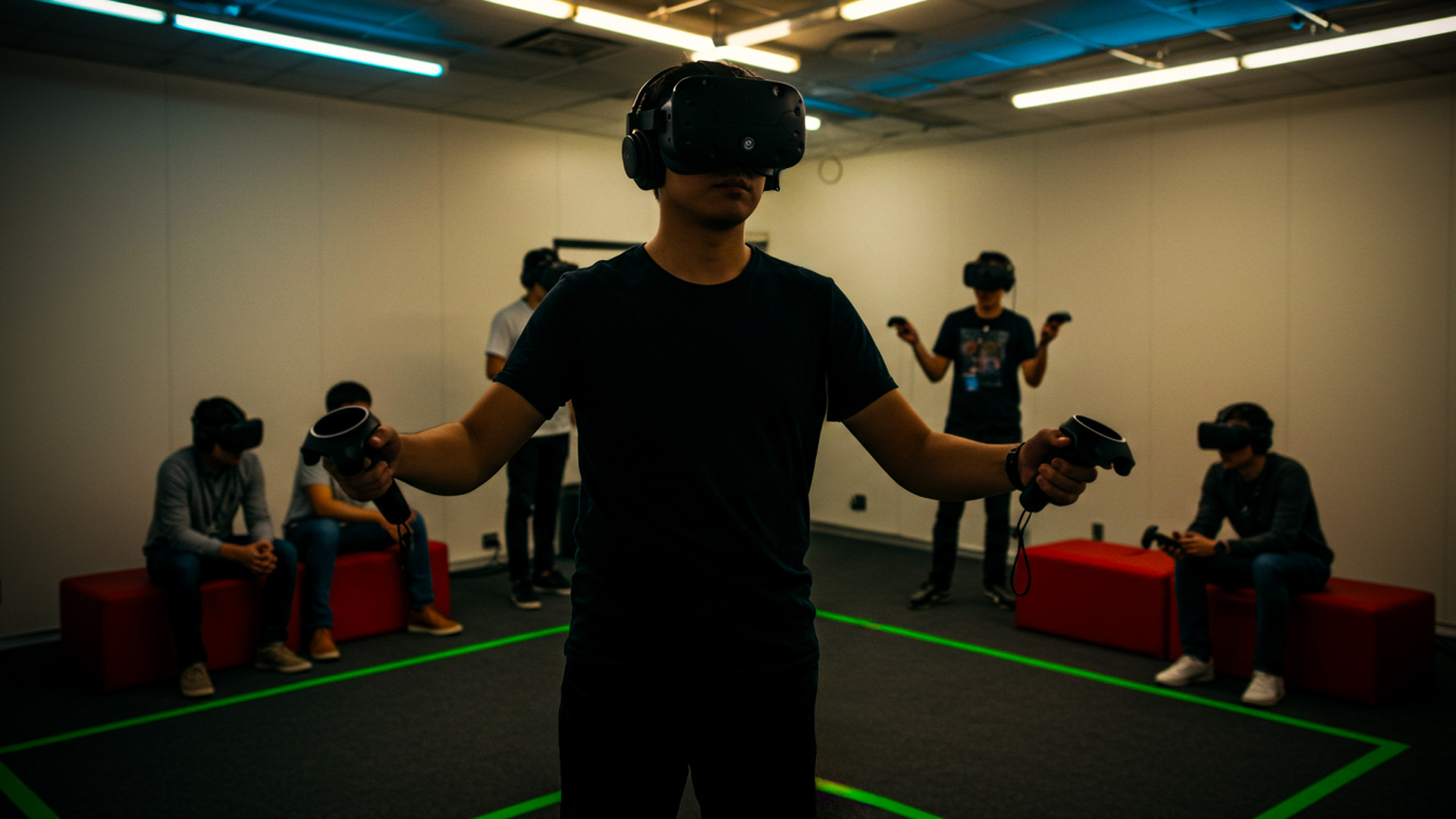
Tracking modalities underpin the precision with which virtual avatars mirror user movements. Outside-in systems rely on external optical trackers and infrared cameras to triangulate reflective markers, offering sub-millimeter accuracy at the expense of calibration complexity. Inside-out tracking, by contrast, embeds cameras and depth sensors within the headset chassis, simplifying setup and enabling spatial mapping in untethered environments. Combined inertial measurement units (IMUs) complement optical data, filtering jitter and predicting motion trajectories. In hybrid configurations, simultaneous localization and mapping (SLAM) algorithms fuse heterogeneous sensor streams, delivering robust six-degree-of-freedom tracking that gracefully handles occlusions and dynamic lighting conditions without tethering users to stationary infrastructures.
Calibration routines and sensor fusion elevate tracking robustness by aligning coordinate frames and minimizing systemic drift. Optical-inertial calibration pipelines reconcile discrepancies between camera pose estimates and gyroscopic readings through bundle adjustment algorithms, continuously refining spatial transforms as users move. External base stations broadcast synchronized timestamps to eliminate desynchronization artifacts, while time-of-flight depth sensors supplement occlusion-prone optical trackers in complex environments. This multi-sensor synergy ensures drift-free tracking over extended sessions, allowing explorations of vast virtual terrains without recalibration. Such holistic calibration architectures underpin the tactile coherence experienced in high-fidelity VR applications, where any tracking anomaly with even sub-centimeter error becomes perceptible.
Haptic Feedback Ecosystems
Haptic feedback ecosystems integrate vibrotactile, force-feedback, and ultrasonic modalities to convey tactile information at multiple fidelity tiers. Advanced gloves embed microfluidic actuators that simulate texture, temperature, and pressure gradients on the skin, while full-body suits utilize distributed force modules to replicate large-scale impacts or resistance. Ultrasonic mid-air haptics create non-contact tactile sensations by modulating acoustic radiation pressure at focal points, enabling users to feel objects without physical attachments. When Sarah navigated the Martian outpost, her suit’s pressure actuators mimicked gravitational shifts, and glove sensors relayed mineral grain textures. This layered haptic architecture transforms abstract simulations into sensate experiences that anchor users within digital realms.
Beyond localized feedback, haptic ecosystems synchronize with spatial audio and visual stimuli to deliver cohesive multisensory narratives. Thermal feedback modules adjust temperature gradients to mimic ambient climate, while directional audio cues reinforce tactile events, creating congruent perceptual anchors. Middleware platforms orchestrate feedback synchrony via timestamped event buses, ensuring that haptic impulses coincide with visual collisions and audio transients. When Sarah’s boots sank into simulated sand, she felt granular resistance, heard shifting dunes, and perceived temperature drops in unison. This synesthetic approach amplifies presence, enabling users to inhabit virtual worlds with the same sensorily integrated clarity they expect in real environments.
Gesture and Gaze-Based Controls
Gesture and gaze-based controls leverage computer vision and machine learning to interpret user intent without traditional controllers. Convolutional neural networks process hand pose estimations from RGB-D sensors, translating finger flexion and wrist rotations into digital commands. Gaze estimation algorithms use pupil-center corneal-reflection models to compute precise eye vectors, enabling foveated interaction paradigms that place UI elements near the user’s focus. When Sarah looked at a virtual switch and made a pinching gesture, the system registered her intention with millisecond precision. These intuitive input modalities lower the barrier to entry, making VR interactions as second nature as pointing and clicking in a two-dimensional interface.
Integrated multi-modal interaction frameworks fuse gesture, gaze, voice, and haptic feedback into cohesive control schemas. Natural language processing modules parse verbal commands, while auditory attention models guide gaze-based selection through audio-visual synchrony. Developers define interaction grammars that prioritize inputs contextually, preventing conflicting signals when multiple modalities activate simultaneously. In scenarios where Sarah’s gaze landed on a data panel as she uttered ‘expand,’ the system intelligently parsed her eye vector and voice inflection to trigger the appropriate action. This orchestration of sensory channels creates a seamless conversational interface, transforming VR from a discrete experience into an environment that responds holistically to human communication.
Ecosystems and Platforms: The VR Continuum
Tethered Versus Standalone Systems
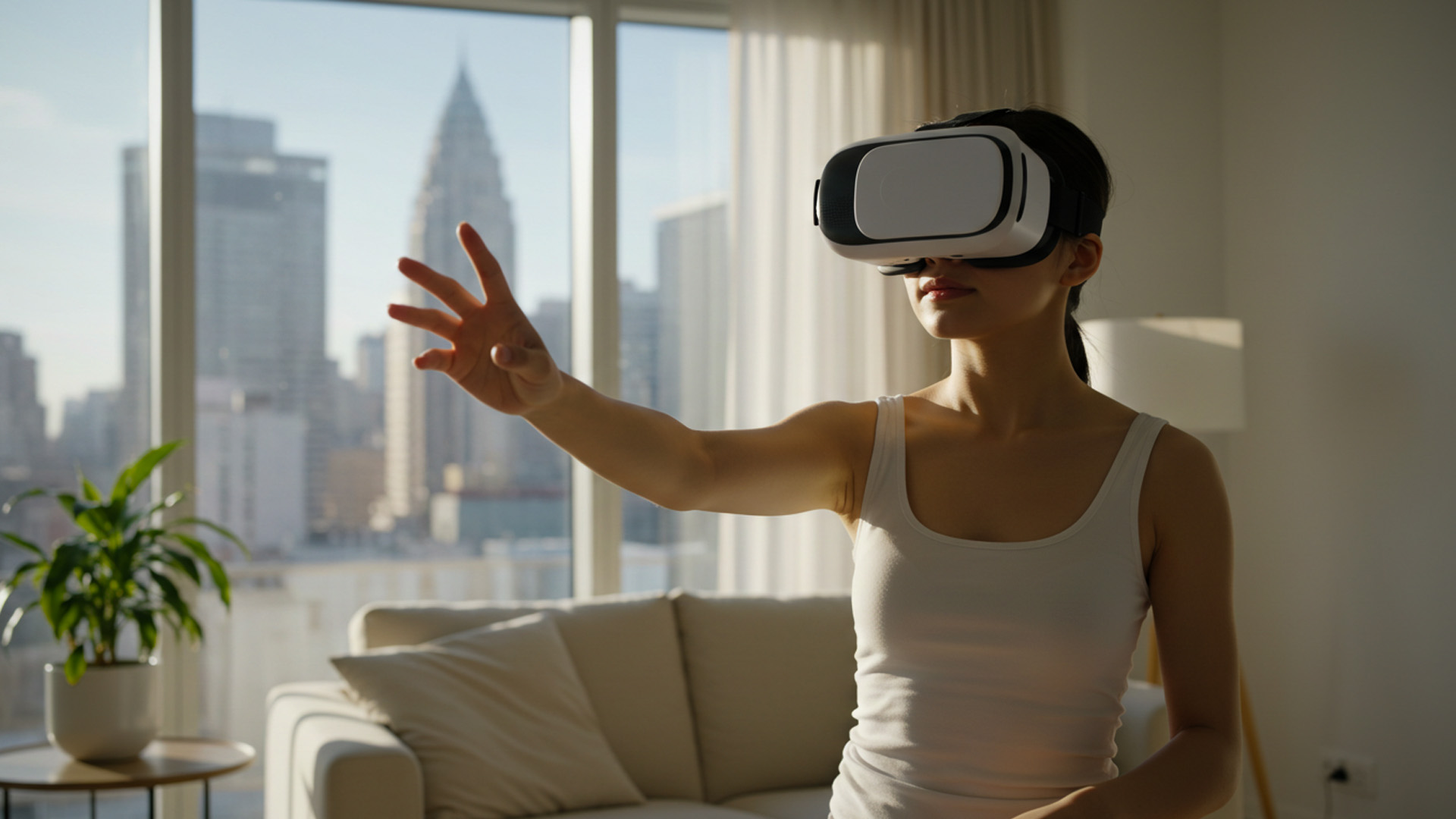
Tethered headsets link to external GPUs via high-bandwidth cables or PCIe bridges, harnessing desktop-class rendering power for uncompromised visual fidelity. These systems deliver breathtaking graphical artistry and expansive computational headroom but constrain users within cable boundaries and stationary play areas. In contrast, standalone devices integrate mobile system-on-chips (SoCs) and streamlining Snapdragon XR platforms to deliver untethered freedom, albeit with processing ceilings dictated by thermal and power budgets. Developers optimize content pipelines for mobile architectures by employing hardware-accelerated codecs and truncated shader variants. This dichotomy between tethered and standalone platforms shapes development strategies, balancing immersion depth against user mobility without sacrificing core VR tenets.
Emerging technologies blur the tethered-standalone divide by introducing wireless streaming protocols and edge computing overlays. WiGig and Wi-Fi 6E networks deliver multi-gigabit throughput with sub-millisecond latency, enabling high-fidelity content to stream from proximal compute nodes to untethered headsets. Cloud-rendering solutions distribute rendering workloads across geographically dispersed servers, leveraging GPU-as-a-service models to transcend local hardware constraints. Additionally, AR cloud infrastructures maintain persistent spatial anchors that both tethered and standalone devices can access, fostering shared experiences across heterogeneous ecosystems. These innovations coalesce to form an adaptive VR continuum that accommodates diverse hardware footprints while preserving immersive consistency.
Social VR and Networking
Social VR platforms leverage networked servers and low-latency protocols to enable co-presence within shared virtual environments. Avatar systems utilize skeletal mesh replication and lip-sync algorithms to render expressive representations of participants in real time. Distributed networking stacks, often built on WebRTC or proprietary UDP-based frameworks, prioritize message ordering and jitter buffers to maintain conversational fluidity. When Sarah joined her colleagues in a holographic conference room, their spatial audio positions and gesture cues synchronized seamlessly, fostering authentic rapport. These social architectures employ trust and security layers to manage identity, access control, and data privacy across federated virtual communities.
Integration with conventional social media APIs and cross-platform support extends VR networking beyond isolated applications. OAuth-based authentication and federated identity systems enable seamless logins from mobile, desktop, and VR clients, unifying user profiles. SDKs provide abstractions for messaging, presence notifications, and user-generated content sharing, facilitating ephemeral interactions like virtual post-it notes or persistent objects within scenes. When Sarah exported a 3D chart from her desktop analytics app, participants in VR ingested it as an interactive hologram. These extensibility frameworks empower developers to weave social features into diverse VR experiences, from collaborative design studios to expansive metaverse realms.
Content Distribution Channels
Content distribution channels in VR encompass proprietary app stores, streaming platforms, and enterprise portals. Developers package experiences into installable binaries for platforms like Oculus Store, SteamVR, and Viveport, each with unique SDK integration and certification protocols. Subscription-based streaming services utilize remote rendering to deliver experiences on low-spec devices, democratizing access without necessitating high-end hardware. Enterprise distribution pipelines often incorporate MDM (mobile device management) systems, facilitating bulk deployment and version control within corporate ecosystems. By aligning distribution strategies with target demographics and technical constraints, creators ensure that their virtual experiences reach intended audiences seamlessly and securely.
Web-based VR leveraging WebXR APIs offers frictionless, browser-native experiences that require no installation. Content served via HTTP(S) can scale automatically through CDNs and leverage progressive web app features for offline caching. Developers employ frameworks like Babylon.js or A-Frame to streamline scene creation and integrate XRInputSources for cross-device input abstraction. When Sarah accessed the VR museum exhibit through her browser, textures loaded incrementally, and voice narration streamed concurrently, creating an immersive tutorial. This direct-to-consumer model lowers adoption barriers, enabling rapid updates and analytics tracking, thus providing creators with immediate insights into user behavior and engagement metrics.
Ecosystems And Platforms